
When a mold problem goes beyond what a homeowner can safely handle on their own, professional remediation is the next step. But for many Gainesville property owners, the remediation process is unfamiliar. Not knowing what to expect can make the experience stressful and make it harder to evaluate proposals from different companies.
This article walks through the typical stages of professional mold remediation so you know what is happening, why each step matters, and what questions to ask along the way.
Step 1: Initial Assessment
Every remediation project begins with understanding what is happening in the property. A professional will visit the site to evaluate the extent of visible mold growth, identify affected materials, and investigate the moisture source that caused the problem.
During this assessment, expect the professional to:
- Walk through the affected areas and any adjacent spaces
- Use moisture meters to check walls, flooring, and other materials
- Ask about the history of the problem, including any past leaks, flooding, or prior mold work
- Take notes on affected materials and the approximate extent of damage
- Discuss whether testing or sampling is recommended and why
The assessment is the foundation for the written scope of work. A thorough evaluation leads to a more accurate proposal and fewer surprises during the project.
Step 2: Scope of Work and Planning
Based on the assessment, the remediation company will prepare a written scope of work. This document should describe:
- Which areas and materials will be addressed
- The containment and air filtration approach
- What materials will be removed versus cleaned in place
- How waste will be handled and disposed of
- Whether the project requires coordination with other trades, such as plumbing or roofing
- The estimated timeline and any access requirements
Review this scope carefully before authorizing work. Ask questions about anything that is unclear. A reputable company will explain their plan and the reasoning behind each element.
Step 3: Containment
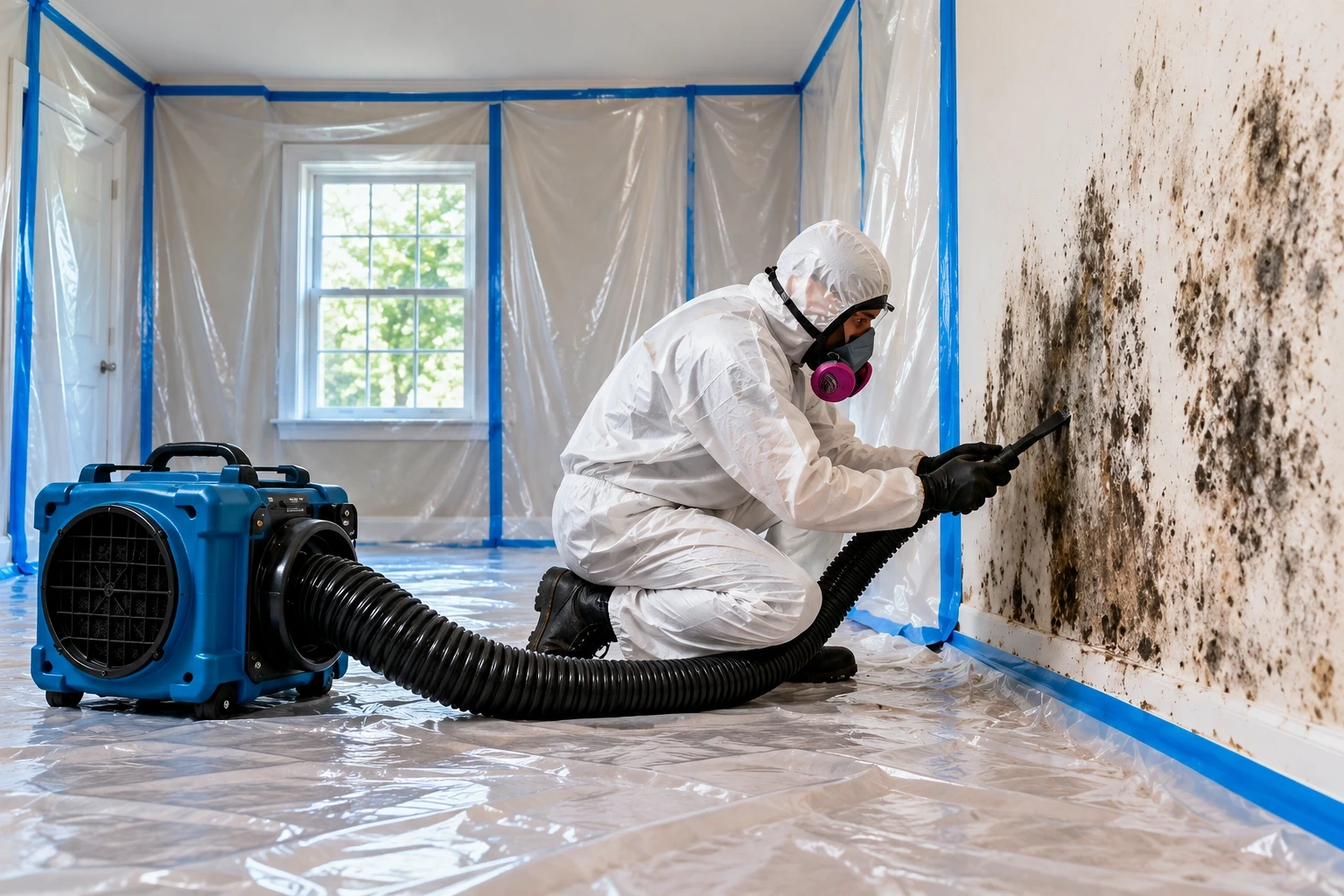
Before any removal work begins, the affected area is isolated from the rest of the building. Containment prevents mold spores and debris from spreading to unaffected areas during the work.
Containment typically involves:
- Sealing off the work area with polyethylene sheeting, usually 6-mil thickness
- Covering doorways, vents, and any other openings that connect to the rest of the building
- Creating negative air pressure inside the containment using HEPA-filtered air scrubbers, which pull air through the filters and exhaust it outside the work area
- Establishing entry and exit procedures, often through a simple decontamination chamber
The size and complexity of containment depends on the project. A small area in one room may require minimal barriers, while a project affecting multiple rooms or an entire floor will need more extensive isolation.
Step 4: Air Filtration
HEPA-filtered air scrubbers run throughout the remediation process. These machines capture airborne particles, including mold spores, down to 0.3 microns. They serve two purposes: protecting the air quality in the rest of the building and reducing the concentration of airborne spores within the work area itself.
Air scrubbers are typically sized based on the volume of the contained area and are positioned to create effective air movement patterns. They continue running during and after active removal work.
Step 5: Removal of Affected Materials
This is the core of the physical remediation work. Materials that are contaminated with mold and cannot be adequately cleaned are removed and discarded. Common materials that typically need removal include:
- Drywall and gypsum board with mold growth on or within the material
- Carpet and carpet padding in affected areas
- Insulation that has been wet or shows mold growth
- Baseboards, trim, and other porous materials with embedded contamination
Hard, non-porous surfaces like concrete, metal, and some types of wood may be cleaned rather than replaced. The remediation team uses appropriate cleaning methods and products for each surface type.
Removed materials are typically bagged in heavy-duty plastic and removed through the containment to minimize any spread of contamination.
Step 6: Cleaning and Treatment
After contaminated materials have been removed, the remaining surfaces in the work area are cleaned. This may include:
- HEPA vacuuming all surfaces within the containment, including walls, framing, subfloor, and any remaining fixtures
- Wiping surfaces with appropriate cleaning solutions
- Treating wood framing or other structural elements that show surface contamination but do not need replacement
- Cleaning any personal belongings or fixtures that remained in the work area
The goal is to remove residual mold spores and debris from all surfaces before the area is rebuilt.
Step 7: Addressing the Moisture Source
Remediation that does not address the moisture source behind the mold growth is incomplete. The moisture problem may have already been repaired before remediation begins, or it may need to be addressed during or after the project.
Common moisture sources in Gainesville properties include:
- Plumbing leaks, both supply and drain lines
- Roof leaks or damaged flashing
- Poor grading or drainage around the foundation
- Inadequate bathroom or kitchen exhaust ventilation
- HVAC issues including condensate drain problems and ductwork condensation
- Flooding from storms or plumbing failures
The remediation team should clearly communicate whether moisture repairs are included in their scope or need to be handled by another contractor. Moisture that is not corrected will lead to regrowth, regardless of how well the remediation work was performed.
Step 8: Drying and Verification
After cleaning, the work area may need time to dry completely before it is rebuilt. Moisture meters and other monitoring tools are used to confirm that materials have returned to acceptable moisture levels.
Some projects include post-remediation verification, which may involve visual inspection, moisture readings, and in some cases, air or surface sampling to confirm that the work area meets the established criteria. Whether formal testing is warranted depends on the project scope, the property type, and any requirements from insurance carriers or property managers.
Step 9: Reconstruction
Remediation and reconstruction are often separate scopes of work. The remediation team removes contaminated materials and cleans the area. Reconstruction involves replacing drywall, flooring, trim, paint, and other finishes.
Some companies handle both remediation and reconstruction. Others focus on remediation and leave the rebuild to a general contractor. Either approach can work well as long as the scope of each phase is clearly defined and the moisture issues have been resolved before new materials are installed.
What to Ask Before Work Begins
- Is the scope of work provided in writing?
- What containment and air filtration methods will be used?
- How will the moisture source be addressed?
- Will post-work verification or testing be performed?
- Is reconstruction included, or will that be a separate project?
- What is the estimated timeline, and will anyone need to vacate the property during work?
Key Takeaways
- Professional remediation follows a structured process: assess, plan, contain, filter air, remove, clean, address moisture, dry, and verify
- Containment and air filtration protect the rest of the building during work
- Addressing the moisture source is just as important as removing the mold
- A written scope of work should be reviewed and understood before any paid work begins
- Post-remediation verification helps confirm that the project goals were met
If your Gainesville property needs mold remediation and you want to understand the process before committing to a plan, start with a conversation. Call MoldRemoverr at (352) 640-7314 to discuss your property and learn what a remediation plan might look like for your situation.
For factual context, read EPA mold cleanup guidance and CDC mold information. MoldRemoverr is an independent referral website; confirm provider coverage, credentials, scope, fees, and availability directly.