
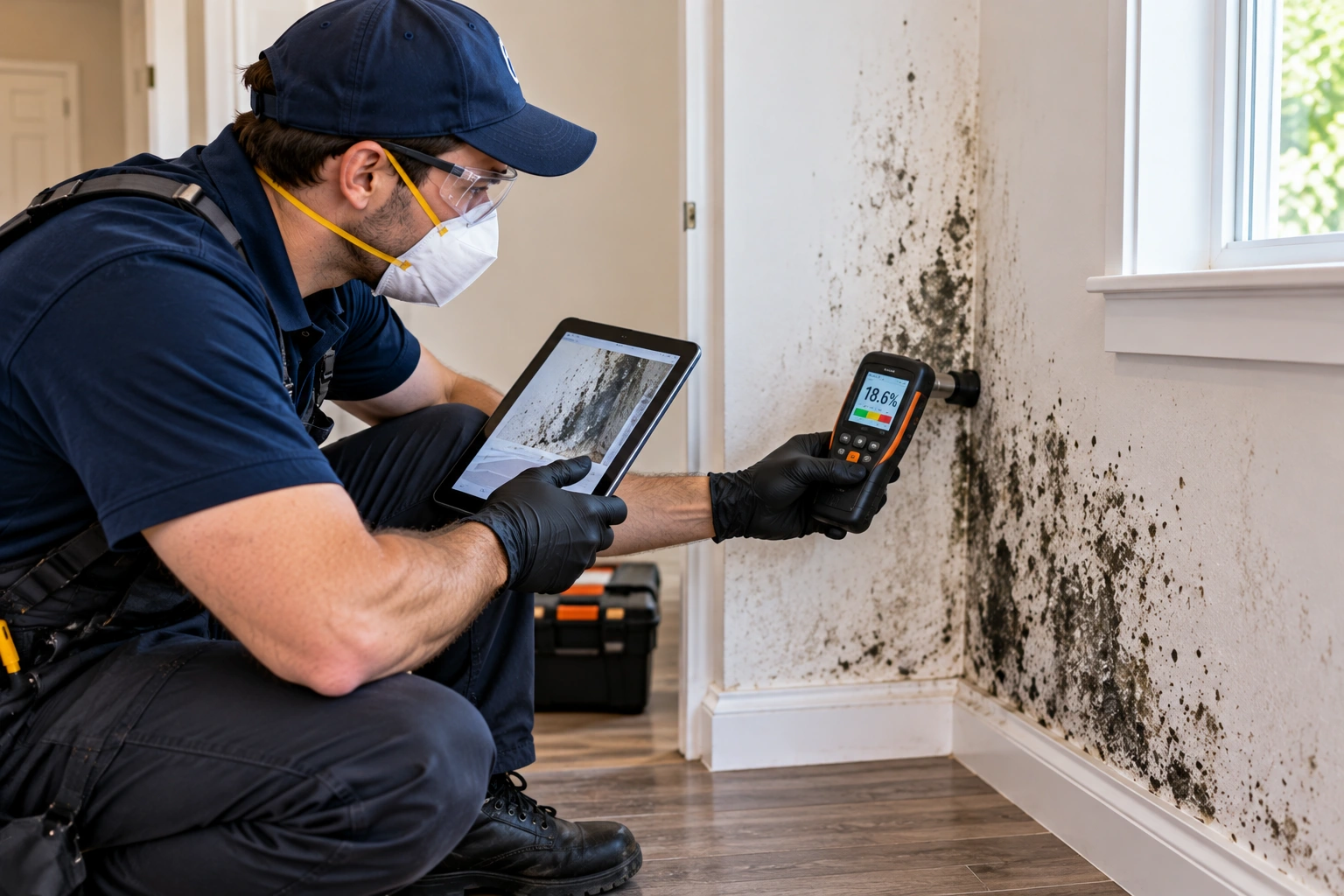
Mold does not always announce itself with dramatic black patches on a wall. In many Gainesville homes, the earliest signs are subtle: a faint musty smell in one room, a stain that keeps coming back after cleaning, or a sense that the air quality is not quite right. Knowing what to look for can help you catch a moisture problem early, before it becomes a larger and more expensive concern.
This guide covers the most common signs of mold growth in Gainesville-area homes and explains when it makes sense to bring in a professional for a closer look.
Visible Growth
The most obvious sign of mold is visible growth on a surface. Mold can appear in many colors, including black, green, gray, white, and even orange or pink. It may look fuzzy, splotchy, or like a spreading stain. Common locations include:
- Bathroom walls and ceilings, especially near showers and tubs
- Around windows where condensation collects
- On the underside of kitchen sink cabinets
- Along baseboards in rooms with poor air circulation
- On ceiling tiles or drywall near a past or current leak
Not every discoloration is mold. Mineral deposits, soap residue, and ordinary dirt can sometimes look similar. However, any persistent or spreading discoloration in a moisture-prone area deserves attention.
Musty Odors
A musty or earthy smell is one of the most reliable early indicators of mold growth, even when nothing is visible. Mold produces volatile organic compounds as it grows, and these compounds have a distinctive odor that most people describe as damp, stale, or like wet cardboard.
If you notice a musty smell that is strongest in one area of your home, that area likely has a moisture problem worth investigating. The growth may be behind drywall, under flooring, or inside a wall cavity where it is not visible during a casual glance around the room.
Pay Attention to Intermittent Odors
Some homeowners notice the smell only at certain times, such as when the air conditioner cycles on, when humidity is high, or after a rain. Intermittent odors can indicate mold growing inside HVAC ductwork or in areas that are only damp under certain conditions.
Water Stains and Discoloration
Water stains on ceilings, walls, or flooring are not mold themselves, but they indicate that moisture has been present. Where moisture lingers, mold can follow. Stains that appear after rain may point to a roof or flashing leak. Stains near plumbing fixtures suggest a slow pipe leak.
In Gainesville homes, ceiling stains in upper-story rooms often relate to roof issues, while stains on lower walls or near the floor can indicate groundwater intrusion or poor drainage around the foundation.
Peeling, Bubbling, or Warped Materials
When moisture accumulates behind painted surfaces, the paint may bubble, peel, or crack. Wallpaper may pull away from the wall. Baseboards and trim may warp or feel soft to the touch. These are signs of ongoing moisture exposure, and mold growth behind the affected surface is common in these situations.
Flooring changes can also be a clue. Hardwood that buckles, laminate that lifts at the seams, or carpet that feels damp underfoot all suggest moisture that could support mold growth beneath the surface.
Condensation on Windows and Pipes
Condensation forms when warm, moist air meets a cooler surface. In Gainesville, this is common on single-pane windows, on cold water pipes, and on the exterior of air conditioning components. Persistent condensation provides the moisture mold needs to grow on nearby surfaces.
If you regularly see water droplets on windows or pipes, consider improving ventilation in the area, insulating exposed pipes, or running a dehumidifier. Condensation itself is not mold, but it creates the conditions where mold thrives.
Allergy-Like Symptoms That Improve Away From Home
Some people are sensitive to mold spores and may experience symptoms like sneezing, congestion, eye irritation, or a scratchy throat when exposed. If these symptoms improve when you leave your home and return when you come back, the indoor environment may warrant investigation.
This is not a diagnostic tool, and many other factors can cause similar symptoms. However, persistent indoor symptoms combined with other signs on this list are a reasonable basis for scheduling an inspection.
Recurring Growth After Cleaning
If you have cleaned mold from a surface and it comes back within weeks or months, the moisture source has not been resolved. Recurring growth is one of the clearest signals that a professional assessment is needed. Surface cleaning addresses the symptom, not the cause.
In Gainesville's climate, recurring mold in bathrooms often relates to inadequate exhaust ventilation. In other areas of the home, it may point to a concealed leak, poor drainage, or humidity levels that remain too high.
When to Call a Professional
The EPA suggests that homeowners can handle cleaning mold on hard surfaces in small areas, generally less than about 10 square feet. Beyond that, or when any of the following conditions apply, professional help is appropriate:
- The affected area is larger than a few square feet
- Mold is growing on porous materials like drywall, insulation, or carpet
- The moisture source is unknown or has not been repaired
- Growth is in a concealed space like inside a wall or under flooring
- You have cleaned the area before and the mold returned
- The home has experienced flooding or significant water damage
Key Takeaways
- Mold can show up as visible growth, musty odors, recurring stains, or material damage
- Not all discoloration is mold, but persistent or spreading marks in damp areas should be investigated
- Gainesville's humid climate makes moisture control especially important for preventing mold
- Recurring growth after cleaning usually means the moisture source needs attention
- An inspection can help identify what is happening and what steps make sense for your property
If you have noticed any of these signs in your Gainesville home and want to understand what you are dealing with, a conversation is the first step. Call MoldRemoverr at (352) 640-7314 to discuss your concerns and find out whether an inspection is the right next move.
For factual context, read EPA mold cleanup guidance and CDC mold information. MoldRemoverr is an independent referral website; confirm provider coverage, credentials, scope, fees, and availability directly.