
If you have been researching mold services for your Gainesville property, you have probably come across two terms that sound similar but describe different approaches: mold removal and mold remediation. Understanding the distinction matters because it affects the scope of work, the cost, and how well the problem stays resolved.
This guide breaks down what each term means, when one approach may be more appropriate than the other, and what Gainesville homeowners should keep in mind when evaluating proposals from mold professionals.
What Is Mold Removal?
Mold removal refers to the physical process of eliminating mold from affected surfaces and materials. It focuses on the visible growth itself. Depending on the surface, removal might involve cleaning hard materials with appropriate solutions, or physically cutting out and disposing of porous materials like drywall or carpet padding that cannot be adequately cleaned.
The scope of a mold removal project is typically defined by the materials and surfaces that show active growth. A professional will assess what can be cleaned versus what needs to be replaced, then carry out the work according to a written scope.
When Mold Removal May Be Sufficient
- A small area of surface mold on a hard, non-porous material like tile or sealed wood
- Growth limited to a single room or surface with a known and already-repaired moisture source
- Situations where the underlying cause of moisture has already been addressed
What Is Mold Remediation?
Mold remediation is a broader process. It includes removal but goes further by addressing the conditions that allowed mold to grow in the first place. The EPA describes remediation as a process that should address both the mold contamination and the moisture source behind it.
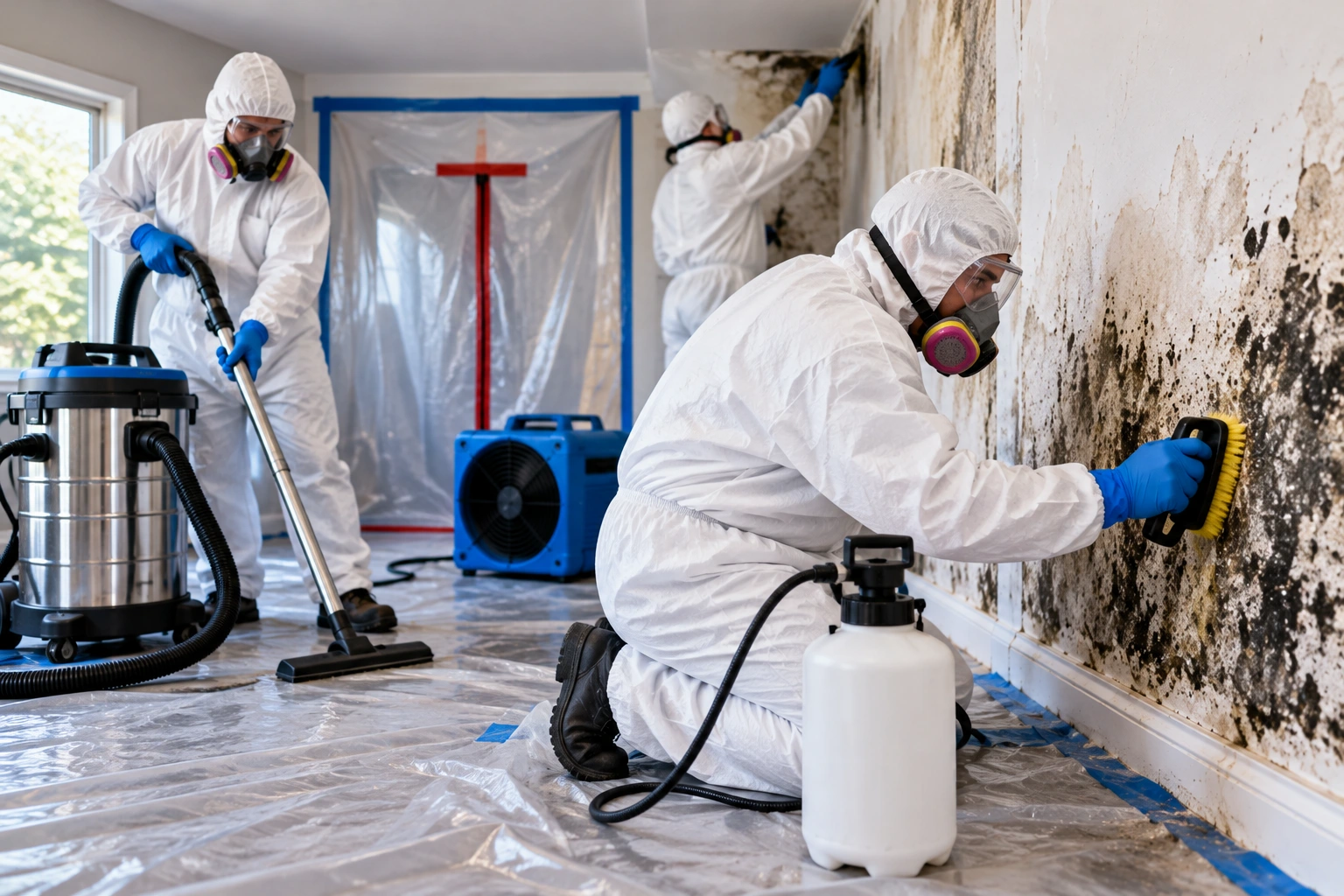
A remediation plan typically includes several coordinated steps:
- Assessment of the affected area and moisture conditions
- Containment to prevent cross-contamination during work
- Air filtration using HEPA-rated equipment
- Removal or treatment of affected materials
- Cleaning and sanitizing the work area
- Addressing the moisture source or coordinating with specialists who can
- Post-work evaluation to confirm the area meets the project goals
When Remediation Is the Better Approach
- Mold affects multiple rooms or large sections of a structure
- The moisture source has not been identified or fully resolved
- There is hidden growth behind walls, under flooring, or in HVAC systems
- The property has experienced significant water damage
- Occupants report persistent musty odors even after surface cleaning
Why the Distinction Matters in Gainesville
Gainesville’s warm conditions and periods of humid weather make indoor moisture management relevant. A property’s leaks, ventilation, and damp materials determine its particular needs.
Because of this climate, simply removing visible mold without addressing the moisture behind it often leads to regrowth. A Gainesville property that has mold removed but still has a slow roof leak, poor attic ventilation, or condensation issues in the HVAC system is likely to see the problem return.
This is why many mold professionals in the area recommend a remediation approach for anything beyond minor surface mold. The goal is not just to clean what you can see today, but to create conditions that discourage future growth.
What to Look for in a Proposal
When you receive an estimate from a mold professional, pay attention to what is included:
- Does the scope describe containment and air filtration, or just cleaning?
- Is there a plan for identifying and addressing the moisture source?
- Are there follow-up steps like post-work evaluation or clearance testing?
- Is the scope of work provided in writing before any paid work begins?
A proposal that only addresses visible mold without mentioning moisture may leave the underlying problem unresolved. On the other hand, not every small mold issue requires full-scale remediation. The right approach depends on the extent of growth, the materials involved, and whether the moisture source has been corrected.
Common Misconceptions
You can completely eliminate all mold from a building
Mold spores exist naturally in outdoor and indoor air. The goal of remediation is not to create a mold-free environment, which is not achievable, but to return the indoor environment to normal conditions and prevent active growth on building materials.
Bleach solves mold problems
Surface cleaning with bleach may remove visible discoloration on hard surfaces, but it does not address growth within porous materials and does nothing about the moisture that caused the problem. The EPA does not recommend bleach as a primary mold treatment for porous surfaces.
If you cannot see mold, it is not there
Mold commonly grows in concealed spaces: behind drywall, under flooring, inside wall cavities, and within HVAC ductwork. A musty smell without visible growth is a reason to investigate further, not to assume the space is clear.
Key Takeaways
- Mold removal focuses on eliminating visible mold from surfaces and materials
- Mold remediation is a broader process that includes removal plus moisture control, containment, and prevention
- In Gainesville's humid climate, addressing the moisture source is essential to preventing regrowth
- Ask for a written scope of work that clearly describes what is included before authorizing any paid services
- Not every situation requires full remediation, but every situation benefits from understanding the moisture source
If you are unsure whether your property needs removal, remediation, or just an inspection to find out what is going on, a conversation is a good place to start. Call MoldRemoverr at (352) 640-7314 to discuss your situation and learn what options make sense for your property.
For factual context, read EPA mold cleanup guidance and CDC mold information. MoldRemoverr is an independent referral website; confirm provider coverage, credentials, scope, fees, and availability directly.