
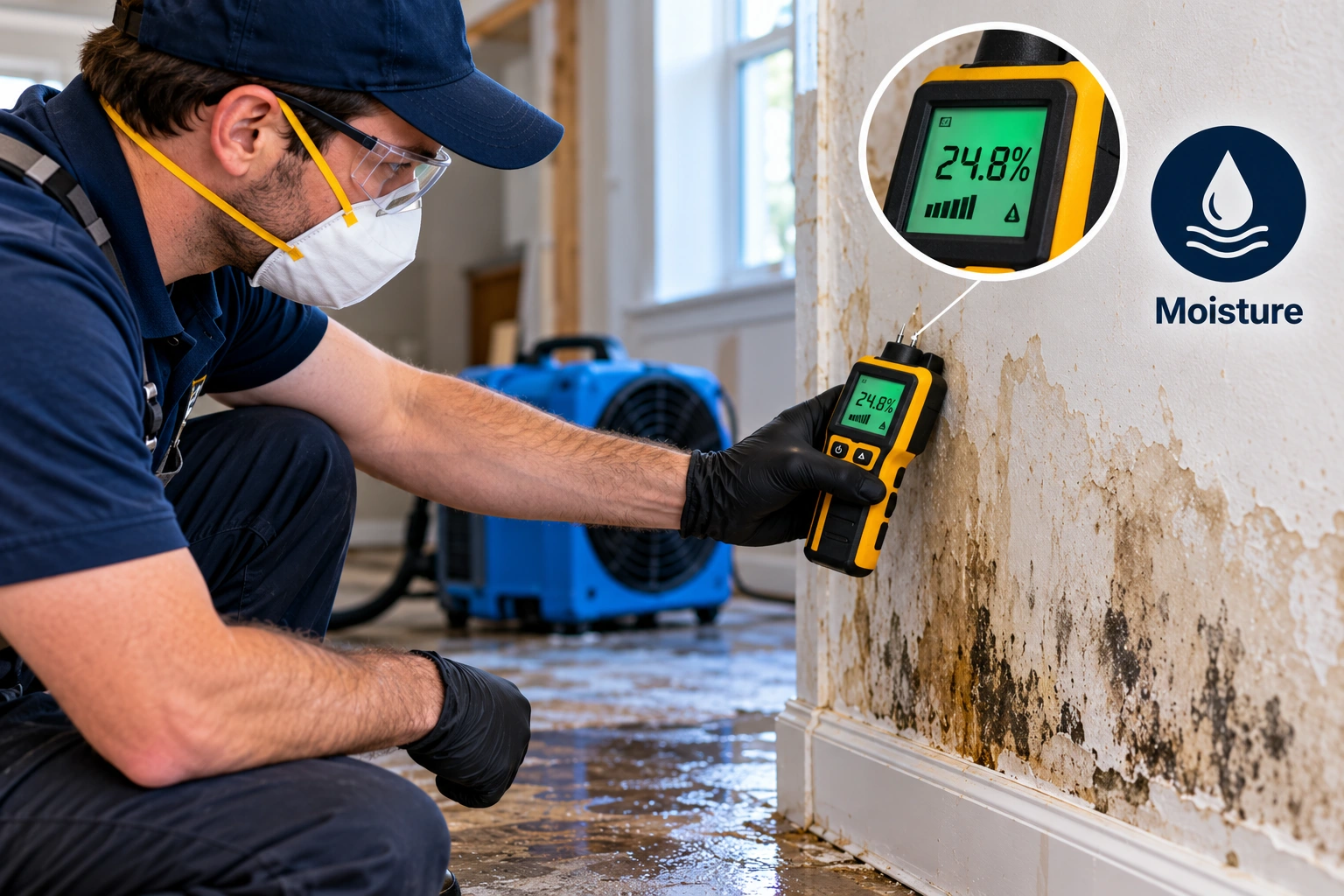
Gainesville sits in the heart of north-central Florida, where warm temperatures and high humidity define the climate for most of the year. While this subtropical environment supports the lush greenery and wildlife the area is known for, it also creates conditions that are favorable for mold growth inside buildings.
Understanding the relationship between Florida's humidity and indoor mold can help property owners take practical steps to protect their homes and businesses.
Why Humidity Matters for Mold
Mold needs three things to grow: moisture, a food source, and a suitable temperature. In most buildings, food sources are everywhere since mold can feed on wood, drywall paper, carpet fibers, dust, and many other common materials. Florida's warm temperatures fall within the range that most mold species prefer.
That leaves moisture as the variable that property owners can most effectively control. When indoor relative humidity stays above 60 percent for extended periods, surfaces and materials can absorb enough moisture to support mold growth, even without a visible leak or water event.
Gainesville’s Climate and Indoor Moisture
Warm weather and humid periods can make drying and condensation control challenging. Outdoor humidity does not establish the condition inside a particular building. Evaluate actual indoor dampness, leak history, and ventilation rather than relying on a regional average.
How Outdoor Humidity Gets Inside
Even well-maintained homes exchange air with the outdoors. Every time a door opens, every gap around a window frame, and every penetration in the building envelope allows humid outdoor air to enter the conditioned space. Common pathways include:
- Gaps around doors and windows
- Attic ventilation that connects to living spaces through ceiling penetrations
- Crawl space moisture that migrates upward through flooring
- The air handler and ductwork, which can draw in unconditioned air through leaks
- Simple activities like opening the garage door for a few minutes on a humid afternoon
Once humid air enters the home, it can deposit moisture on cooler surfaces through condensation. This is why mold sometimes appears on the backside of exterior walls, on cold water pipes, or near air conditioning vents where cooler air meets warmer, moister air.
The Role of Air Conditioning
Air conditioning does more than cool the air. It also removes moisture through the condensation process at the evaporator coil. A properly sized and maintained AC system is one of the most important tools for controlling indoor humidity in Gainesville.
However, several common issues can undermine this moisture removal:
Oversized Systems
An AC unit that is too large for the space will cool the air quickly and then cycle off before it has run long enough to adequately dehumidify. The result is a home that feels cool but still has high indoor humidity. This is sometimes called short cycling, and it is a frequent contributor to mold problems in Florida homes.
Thermostat Settings
Setting the fan to "on" instead of "auto" keeps air moving through the system continuously, but it also re-evaporates moisture that collected on the coil during cooling cycles. Running the fan on "auto" allows moisture to drain from the coil between cycles.
Deferred Maintenance
Dirty coils, clogged drain lines, and low refrigerant can all reduce the system's ability to remove moisture from the air. A clogged condensate drain can also cause water to back up and leak into the home, creating a direct water source for mold growth.
Problem Areas in Gainesville Homes
Certain areas of a home are more vulnerable to humidity-related mold growth. In Gainesville, the most common problem areas include:
- **Bathrooms** without adequate exhaust ventilation, especially those with showers used daily
- **Closets** on exterior walls, where air circulation is limited and the wall surface may be cooler
- **Laundry areas** where dryer vents are disconnected or where washing machines sit on concrete slabs
- **Attics** where roof leaks, inadequate ventilation, or ductwork condensation create persistent moisture
- **Garages and enclosed porches** that are not air-conditioned but share walls with conditioned spaces
- **Under kitchen and bathroom sinks** where slow plumbing leaks may go unnoticed
Practical Steps for Managing Indoor Humidity
While you cannot change Gainesville's climate, you can take steps to manage indoor moisture effectively:
- **Keep indoor humidity below 60 percent.** A simple hygrometer can help you monitor levels. The EPA recommends keeping indoor humidity between 30 and 50 percent when possible.
- **Run exhaust fans during and after showers.** Leave bathroom fans on for at least 15 to 20 minutes after bathing.
- **Maintain your AC system.** Schedule annual maintenance, replace filters regularly, and address any condensate drainage issues promptly.
- **Fix leaks quickly.** Even small drips under a sink or around a window can create enough sustained moisture for mold growth within 24 to 48 hours.
- **Improve air circulation.** Keep interior doors open when possible, use ceiling fans, and avoid pushing furniture tight against exterior walls in humid rooms.
- **Consider a dehumidifier.** In particularly humid areas of the home, or during periods when the AC alone is not keeping humidity in check, a standalone dehumidifier can help.
- **Inspect regularly.** Check under sinks, around windows, and in the attic a few times a year. Early detection of moisture problems is far less expensive than remediation after mold has established itself.
Key Takeaways
- Gainesville's humid subtropical climate creates year-round conditions that can support mold growth indoors
- Indoor humidity above 60 percent can lead to mold on building materials even without a visible leak
- Air conditioning is a primary tool for moisture control, but it must be properly sized and maintained
- Common problem areas include bathrooms, closets on exterior walls, attics, and spaces with limited air circulation
- Regular maintenance, prompt leak repair, and humidity monitoring are the most effective prevention strategies
If you are concerned about humidity or moisture in your Gainesville property, or if you have noticed signs of mold growth, talking through the situation can help you figure out the right next step. Call MoldRemoverr at (352) 640-7314 for a straightforward conversation about your property.
For factual context, read EPA mold cleanup guidance and CDC mold information. MoldRemoverr is an independent referral website; confirm provider coverage, credentials, scope, fees, and availability directly.